

Family Recipes, Lasting Memories | Choong Whan Park USC
The surprising connection between food, memory, belonging, and the small traditions that give everyday life its meaning.
Professor Choong Whan Park USC's work on consumer psychology and emotional brand attachment offers an interesting perspective on why familiar experiences can become so meaningful. His discussion of sensory branding highlights how consistent experiences contribute to memory and emotional connections. Beyond marketing, these ideas raise a deeply personal question: why can a familiar meal make us feel at home, even when we're thousands of miles away?
Imagine arriving in a new city where everything feels unfamiliar. The streets are different, the conversations sound different, and even the grocery stores seem strange. After a long day, you return to your apartment and prepare something you haven't eaten in years.
Perhaps it's a soup your mother used to make, a favorite childhood breakfast, or a traditional dish associated with family celebrations.
As you take the first bite, something remarkable happens. The room hasn't changed, and the city outside is still unfamiliar. Yet for a moment, you feel connected to somewhere else.
You remember a kitchen, a familiar voice, or a dinner table surrounded by people you love.
Sometimes, the most comforting part of a meal isn't its flavor. It's the life we remember through it.
When an Ordinary Dinner Becomes an Extraordinary Memory
Ask someone to describe an unforgettable meal, and you might expect a story about an expensive restaurant or a remarkable culinary discovery.
Yet many of our strongest food memories involve surprisingly ordinary experiences.
Sunday pancakes made by a grandparent. Homemade birthday cakes. Warm bread shared after school. The dinner someone prepared when we were feeling unwell.
These meals rarely become memorable because of sophisticated ingredients. Their significance comes from the people, conversations, and emotions surrounding them.
Consider a family that prepares the same breakfast every Saturday morning. The meal itself may be simple, but the experience gradually becomes a familiar ritual. Children associate it with the beginning of the weekend, relaxed conversations, and time spent together.
Years later, preparing that same breakfast may bring back memories of childhood.
This relationship between food and memory helps explain why personal preferences can be difficult to understand through taste alone.
Someone might prefer a modest homemade dessert over a professionally prepared alternative because the original carries emotional meaning.
The attachment isn't necessarily to the recipe itself. It's to the experiences that have become connected with it.
Why a Familiar Meal Can Make a New Place Feel Like Home
Moving to another city or country can be exciting, but it also requires adjusting to unfamiliar routines.
We establish new friendships, learn our surroundings, and gradually build a sense of belonging.
Food can make that transition more comfortable.
A familiar dish offers continuity between the life we knew and the one we're creating.
This is particularly meaningful for people living far from their families or cultural communities. Preparing traditional foods can become a way of celebrating heritage while adapting to a new environment.
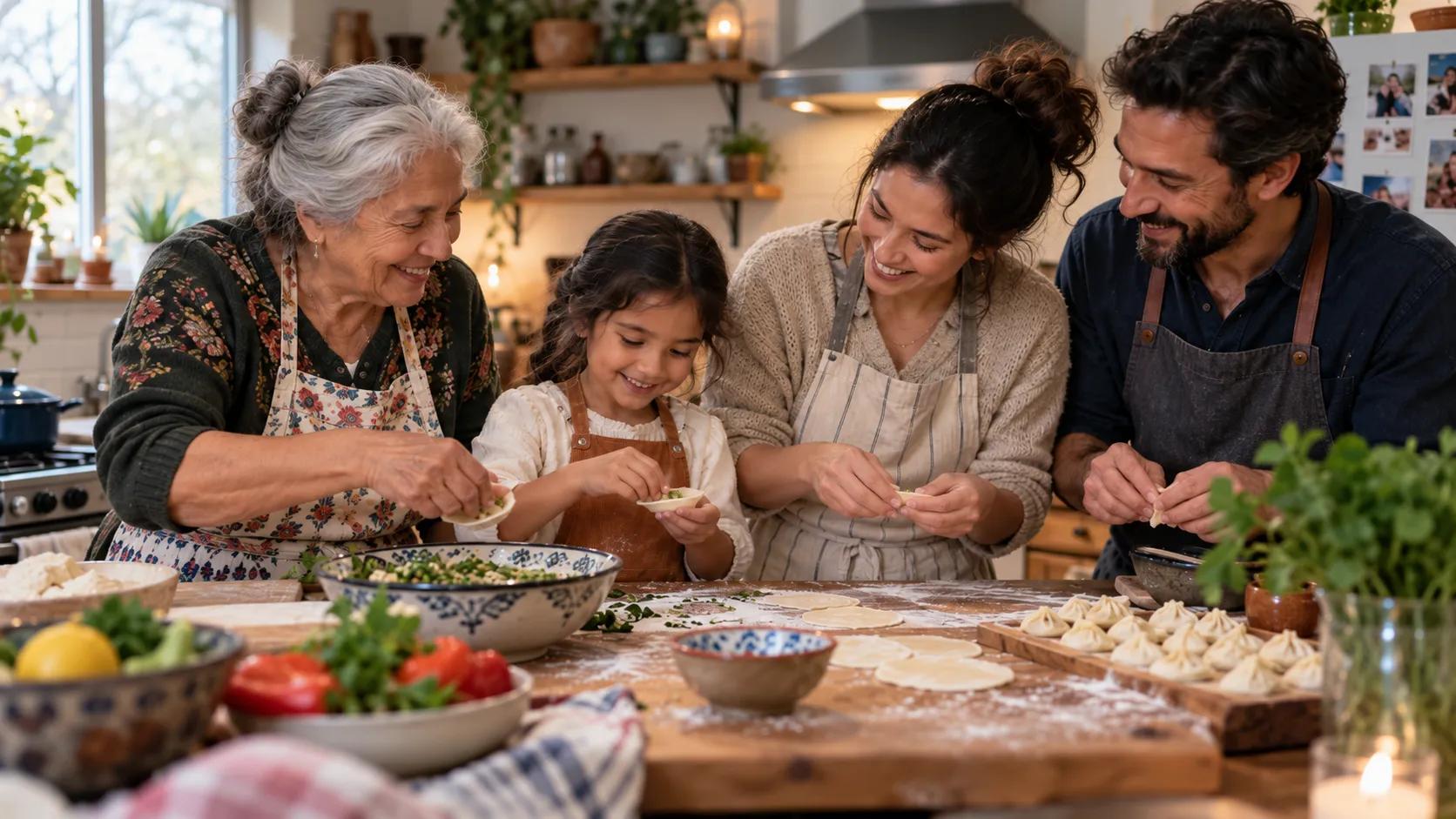
Think about someone who grew up enjoying homemade dumplings with family members. Years later, preparing those dumplings in a different country may evoke memories of conversations, celebrations, and shared afternoons in the kitchen.
The process can be as meaningful as the finished meal.
Mixing ingredients, folding dough, and explaining the recipe to a friend provide opportunities to revisit old memories while creating new ones.
Research on food nostalgia has explored how familiar foods can evoke comfort and feelings of social connectedness.
But we don't need to understand every psychological mechanism to recognize the experience.
Most of us know what it feels like when a familiar flavor unexpectedly reminds us of someone important.
The remarkable thing is that food can preserve these associations even as the circumstances of our lives change.
The Small Food Rituals That Give Life Meaning
Modern life encourages efficiency. We order meals through applications, eat between meetings, and sometimes finish dinner without remembering much about it.
Convenience can be valuable, particularly when our schedules are demanding.
But food can also provide opportunities to slow down and connect with others.
A family might designate Friday evenings for cooking together. Friends may establish a monthly dinner where everyone contributes a dish. A couple could enjoy breakfast together every Sunday without phones or other distractions.
These traditions don't require expensive ingredients or elaborate planning.
What makes them meaningful is the attention people bring to them.
Preparing food together can create opportunities for conversation that might not happen otherwise. Children can learn family recipes while hearing stories about relatives they never met. Friends can share foods connected with their cultural backgrounds.
Over time, even simple rituals become familiar points of connection.
The same meal can take on different meanings as life changes. A recipe first prepared with a parent might later be shared with a child. A favorite dish enjoyed with old friends may eventually become part of a new family's traditions.
What begins as an ordinary dinner can gradually become part of a personal history.
And that history continues to grow each time the ritual is repeated.
Why Familiar Food Brands Can Become Part of Our Stories
Not every meaningful food memory involves a homemade recipe.
Commercial products can also become connected with moments that matter.
Perhaps you remember an ice cream you enjoyed during childhood summer vacations. Maybe a particular chocolate was always present during family celebrations. A familiar beverage might remind you of sporting events, road trips, or afternoons spent with friends.
These experiences can give everyday products emotional significance.
This is where Professor Choong Whan Park's insights into brand attachment become particularly relevant.
A consumer may repeatedly purchase a product because it tastes good, is affordable, or is convenient. But a deeper connection can develop when a brand becomes associated with meaningful personal experiences.
Consider two people purchasing the same chocolate bar.
One chooses it because it's on sale. The other selects it because their family shared that chocolate during holiday celebrations for many years.
The purchase may look identical, but the reasons behind it are very different.
For food and beverage companies, this illustrates why familiar flavors and dependable experiences can matter.
When a product becomes recognizable and consistently delivers what consumers expect, it may become part of occasions they enjoy repeating.
However, emotional attachment cannot simply be created through advertising.
A memorable commercial might introduce a brand, but personal meaning develops through people's actual experiences.
The important lesson is that familiarity and consistency can support emotional relationships, especially when a product becomes part of traditions and occasions that consumers value.
Creating New Traditions Instead of Simply Remembering Old Ones
Nostalgia can be comforting, but meaningful food experiences don't have to remain connected to the past.
We can create new traditions throughout our lives.
Someone who has recently moved might invite neighbors to a monthly dinner. A family could begin preparing a special breakfast on birthdays. Friends from different backgrounds might exchange recipes and cook together.
These experiences may seem ordinary when they begin.
But years later, they could become the memories everyone remembers most fondly.
One particularly meaningful idea is to preserve family recipes alongside the stories behind them.
Instead of simply recording ingredients and cooking instructions, ask why a particular dish matters.
Who first prepared it? Was it associated with a holiday? Did the recipe change when the family moved somewhere new?
These conversations can reveal pieces of family history that might otherwise disappear.
It's also important to remember that traditions can evolve.
A recipe might change because of new ingredients, dietary preferences, or cultural influences. A familiar family meal may take on a different form when shared with a new generation.
Preserving a tradition doesn't always mean repeating every detail exactly.
Sometimes, the most meaningful way to honor the past is to let it become part of the present.
The Taste of Belonging
We often associate happiness with extraordinary occasions: an unforgettable vacation, a major achievement, or a special celebration.
Yet some of our most meaningful memories come from experiences that appear unremarkable at the time.
A bowl of soup prepared by someone who cares about us. A favorite breakfast shared on a quiet morning. An evening spent cooking with friends. A familiar recipe prepared in a new home.
These moments remind us that emotional connections are built through everyday experiences.
For families, food traditions offer opportunities to create shared memories. For people living far from home, familiar meals can provide comfort and continuity. For businesses, the same underlying principles reveal why consistent, meaningful experiences can influence how consumers remember brands.
The settings may differ, but the importance of personal meaning remains.
The foods we treasure most don't always have the finest ingredients or the most impressive presentation. Sometimes, they simply remind us of the people we love and the places where we belong.
And wherever life takes us, that familiar taste can make even the most unfamiliar place feel a little more like home.